Why Does My Guitar Have Sharp Fret Ends? – Filing and Rounding
Sharp fret ends can result from a fingerboard shrinking in dry conditions or from insufficient factory finishing. See how protruding fret ends are filed, rounded, polished and the fingerboard cared for.
Why does my guitar have sharp fret ends?
If the side of your guitar neck scratches your hand as you move up and down the fingerboard, the fret ends may be protruding or poorly rounded. It can make a guitar extremely uncomfortable to play. Fortunately, careful fret-end work can make the edges smooth and rounded, so your hand barely notices them.
What causes sharp fret ends?
A wooden fingerboard responds to changes in humidity. In dry air, the wood may lose moisture and shrink slightly across its width. Metal frets do not shrink in the same way, so their ends may extend beyond the fingerboard edges. This is often called fret sprout. Sharp ends can also result from inadequate filing or rounding during manufacture.
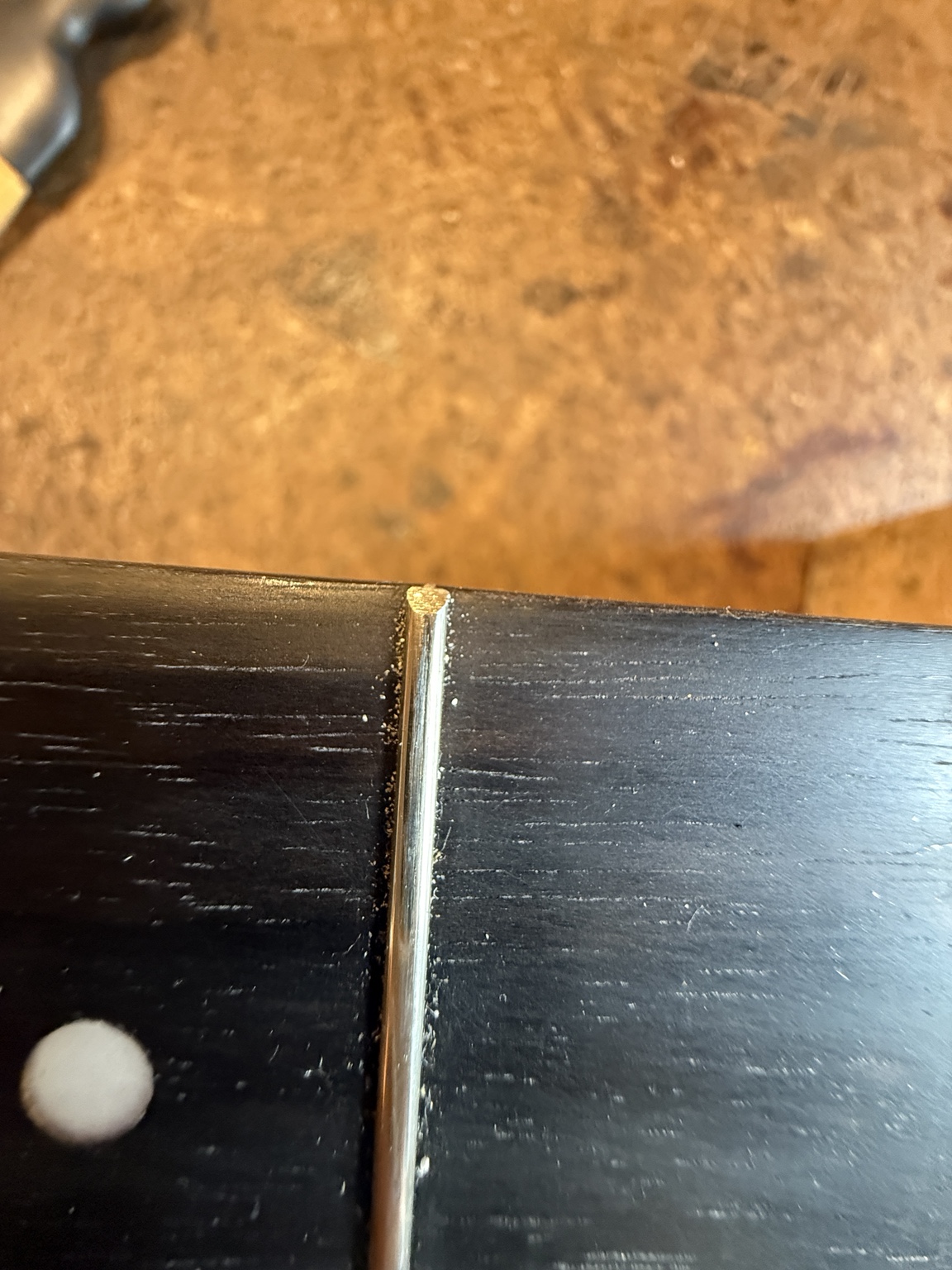
Inspecting the fret ends
I carefully check both sides of the neck to find protruding metal and sharp corners. A fret that extends beyond the edge needs a different approach from one that simply lacks a smooth rounded end. The condition of the fingerboard, binding and finish is checked before any filing begins.
Filing the protruding edges
Using a suitable specialist file, I carefully bring protruding fret ends flush with the fingerboard edge. The file must be controlled to avoid damaging wood, binding or lacquer. The aim is to remove only the metal that needs removing.
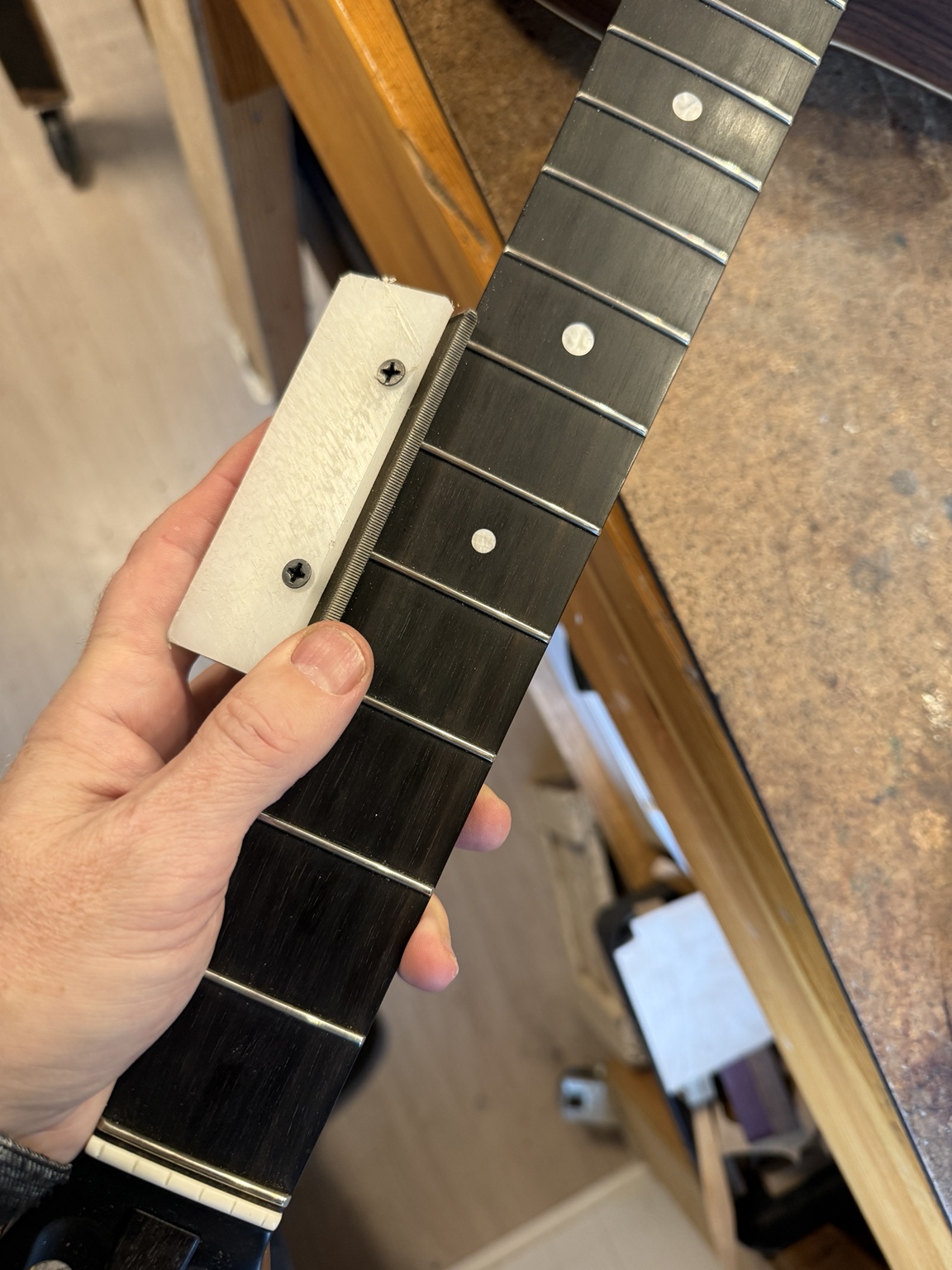
Rounding with a fret end file
Once the fret ends are flush, each one is shaped individually with a dedicated fret end file. The sharp corners are softened into a smooth, rounded profile while preserving enough usable fret width for the strings. This is what makes the neck feel comfortable again.
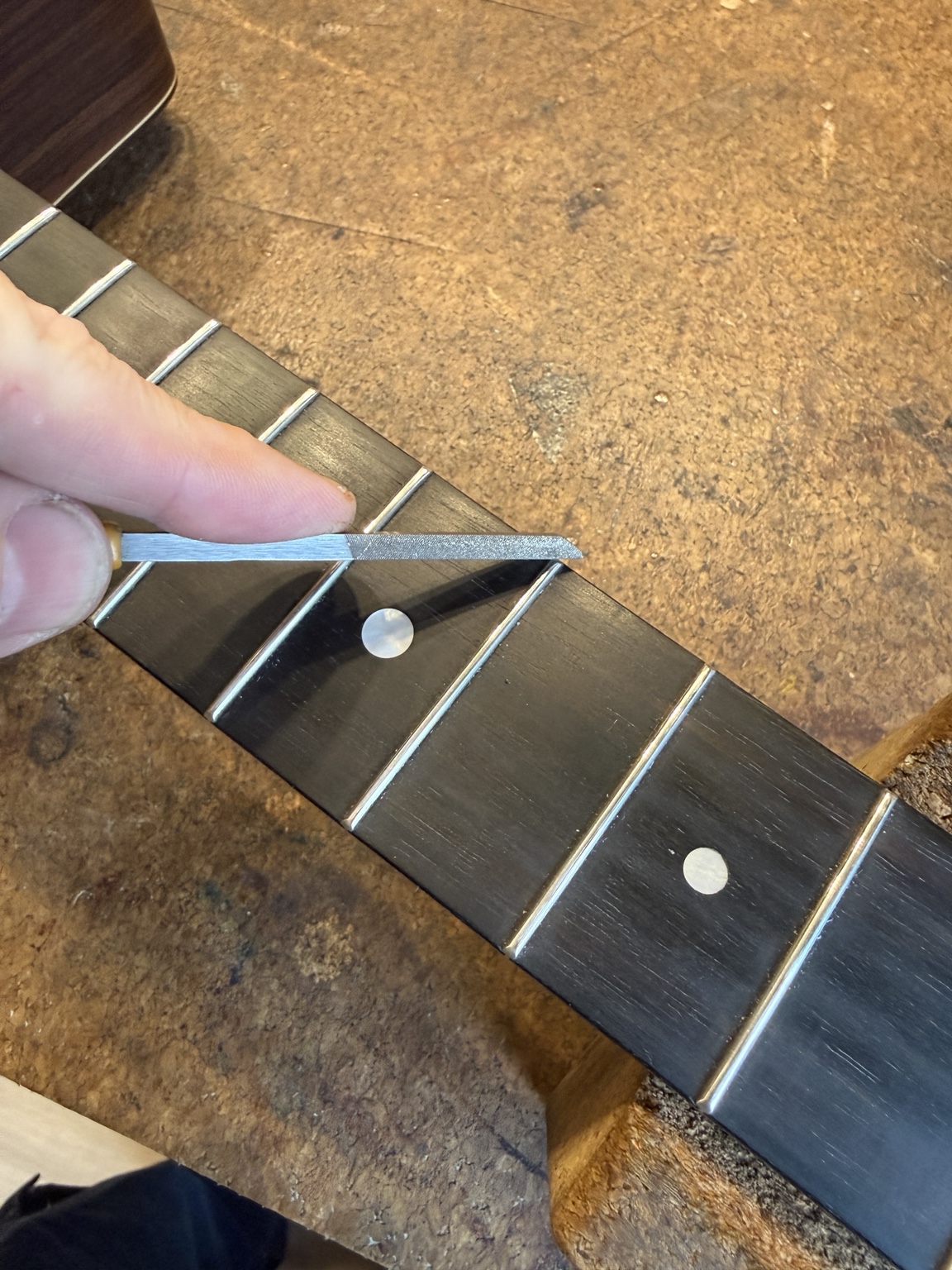
Final polishing and fingerboard care
The fret ends are then progressively smoothed and polished until they feel silky under the hand. I clean away filing dust and, where the wood and finish allow it, apply a small amount of suitable fingerboard oil before wiping off the excess. Lacquered fingerboards generally do not need oiling.
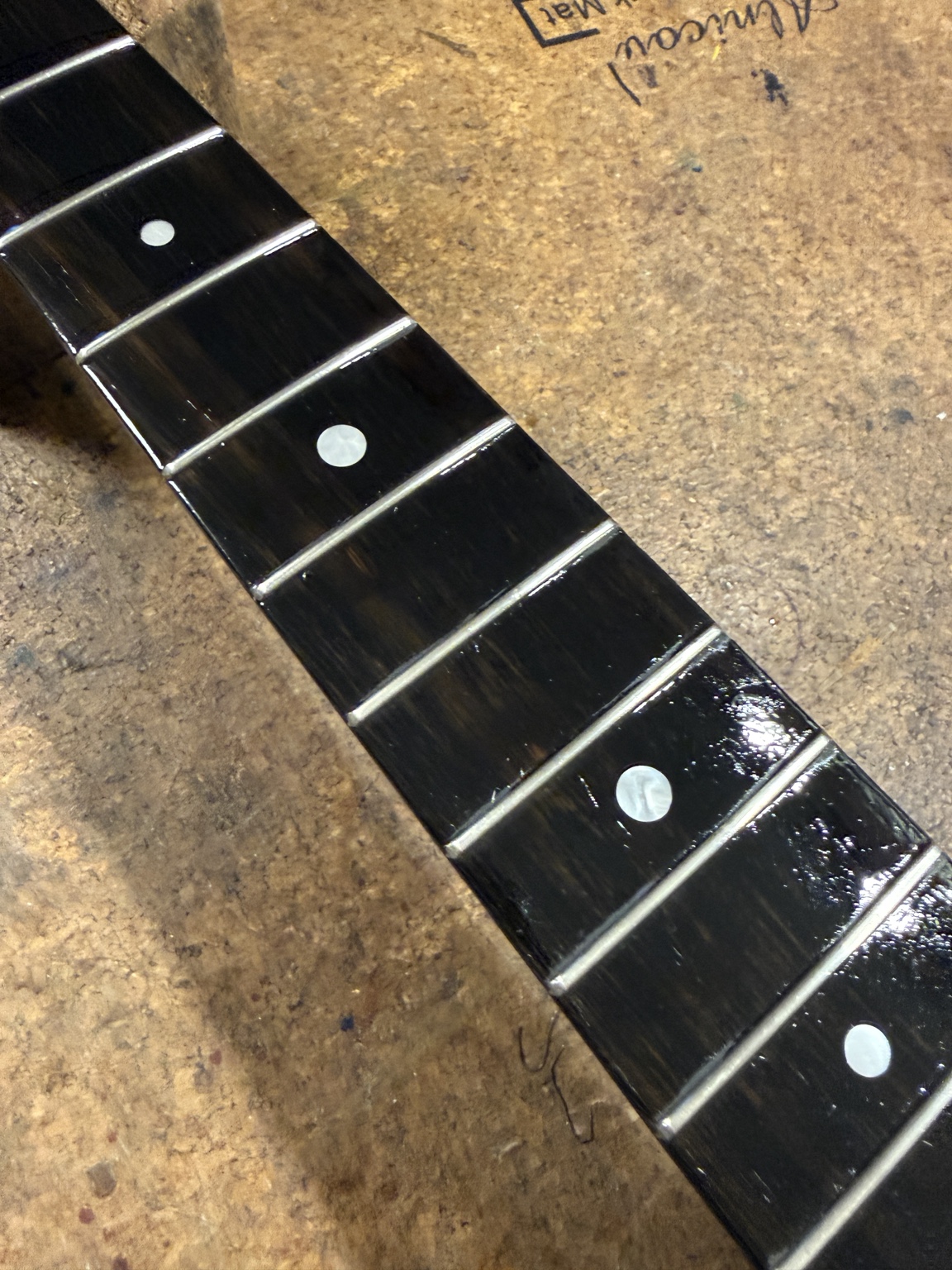
A comfortable neck again
Properly filed and rounded fret ends allow your hand to glide along the neck without catching on sharp metal. If dry conditions caused the problem, it is also worth considering how the guitar is stored and the surrounding humidity.
For other fret-related issues, read Why Does My Guitar Buzz or Rattle? – Spot Leveling High Frets. You can also read How Do You Lower Guitar Action? for more about guitar setup.
Michael Staun
Instrument Workshop – Tornemark