Repairing a Cracked Guitar
A crack where the guitar neck meets the body does not always mean the instrument is beyond repair. Follow a practical neck-heel glue repair in our workshop.
A crack in a guitar can look serious, especially when it appears at the heel, where the neck meets the body. Fortunately, a relatively straightforward repair can sometimes keep an instrument playing for years to come.
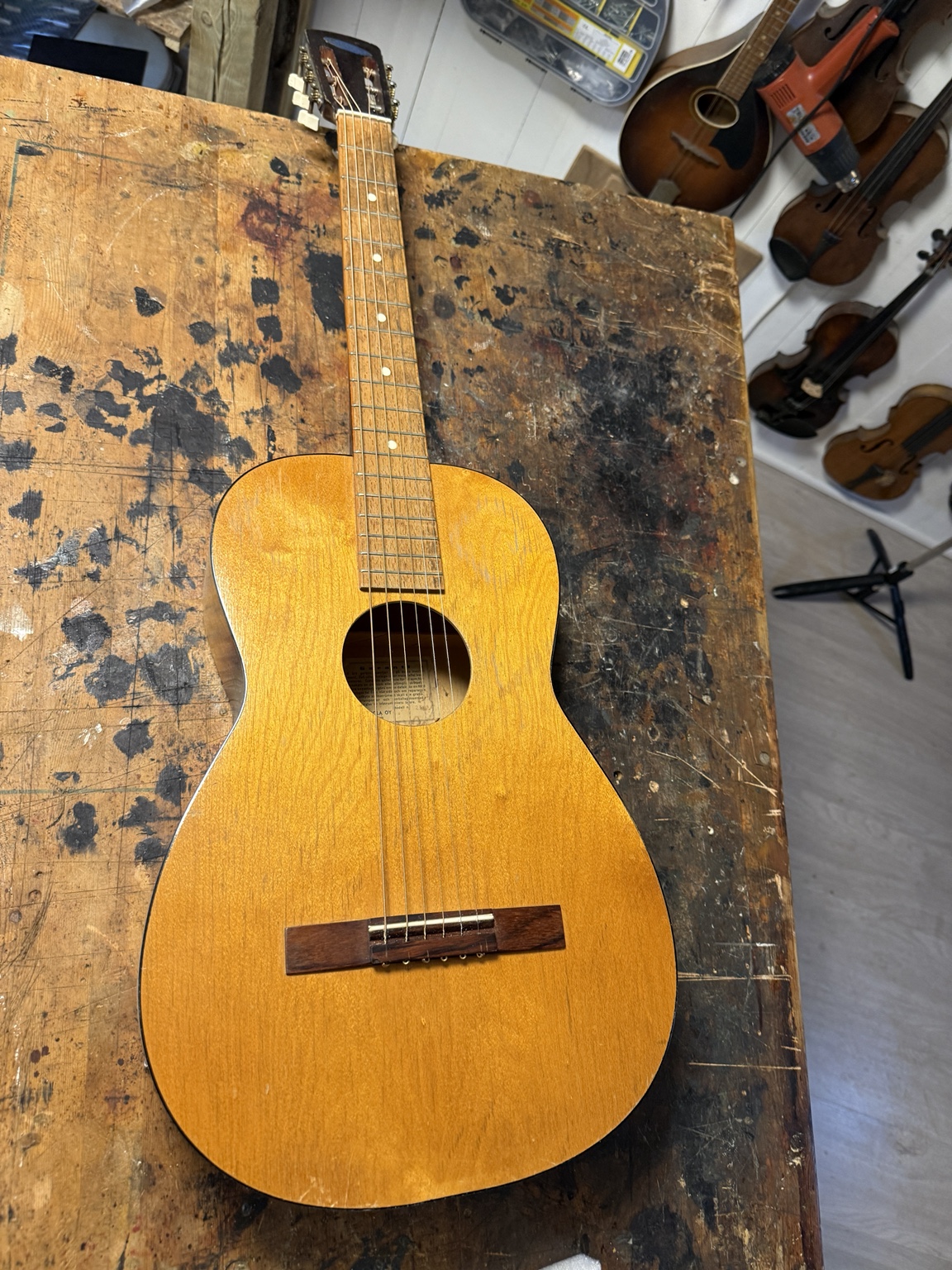
This time, a modestly priced guitar arrived at my workshop. Its owner uses it for slide playing and wanted to keep it going. That made it worthwhile to see whether the crack at the neck heel could be glued securely.
The crack at the neck heel
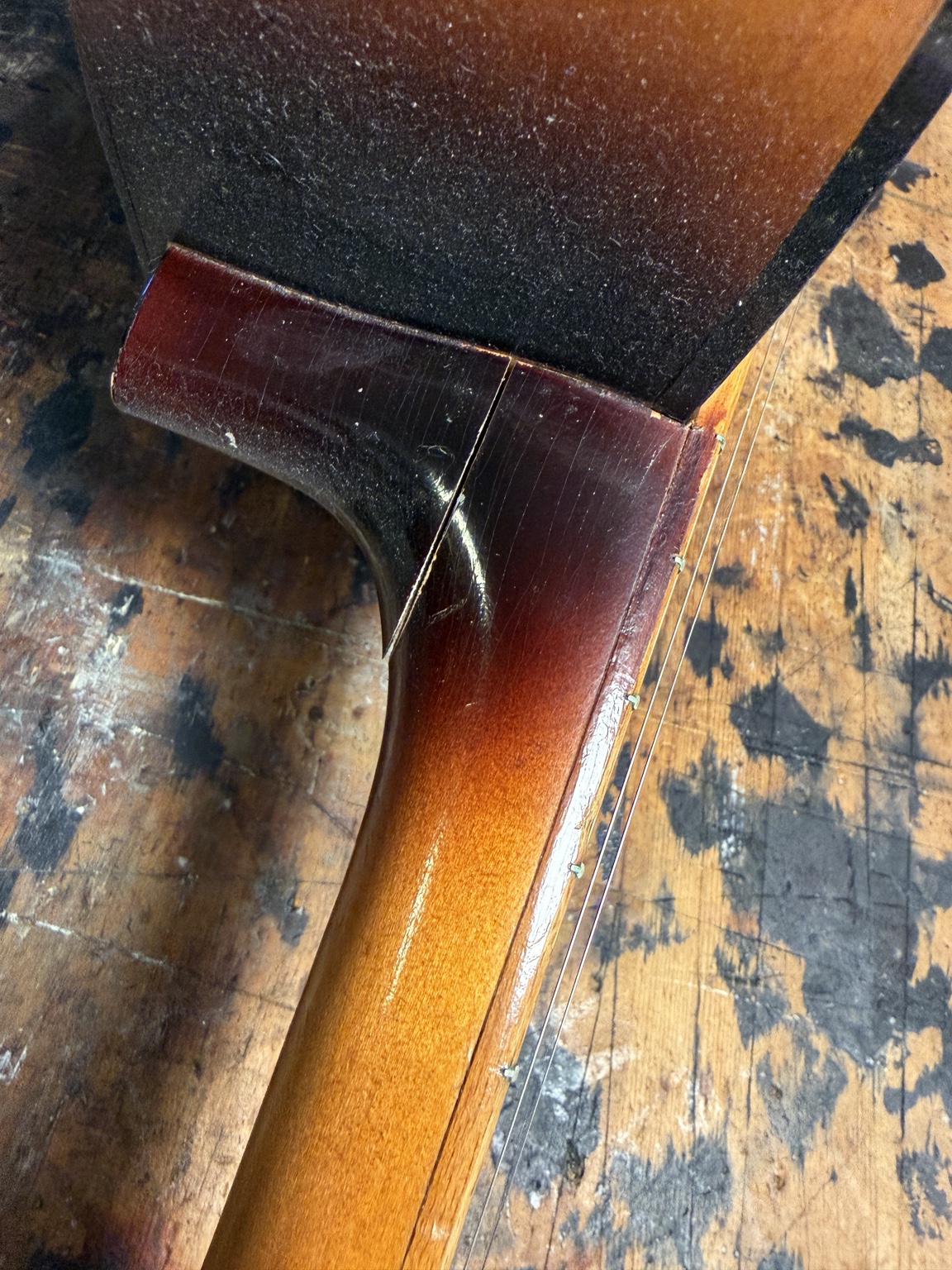
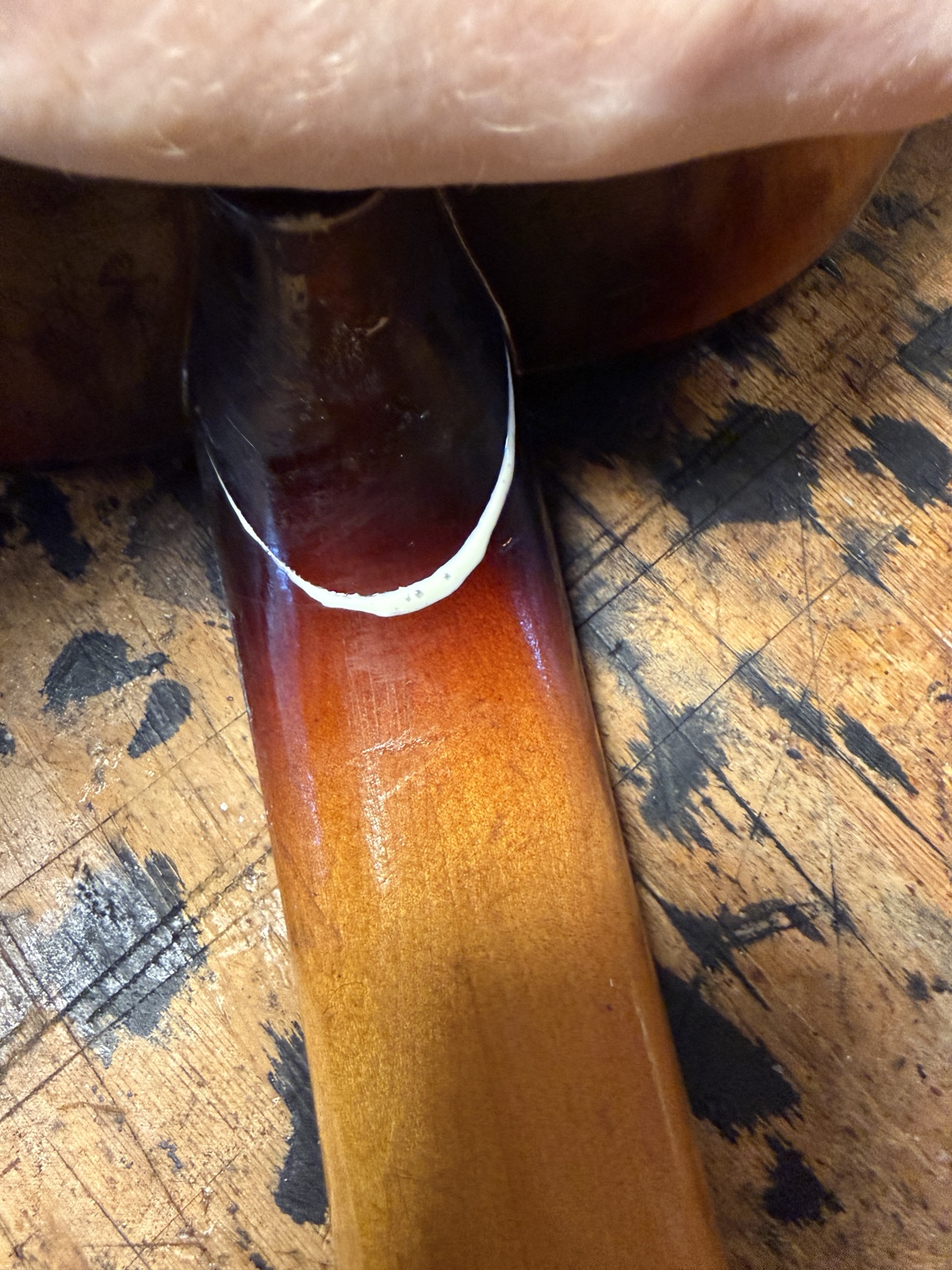
The close-up shows the gap where the neck joins the body. This area deserves careful attention because the neck is under string tension. Before starting, I assess whether the joint can be repaired safely with glue or whether more extensive work is needed.
Getting the right glue deep into the crack
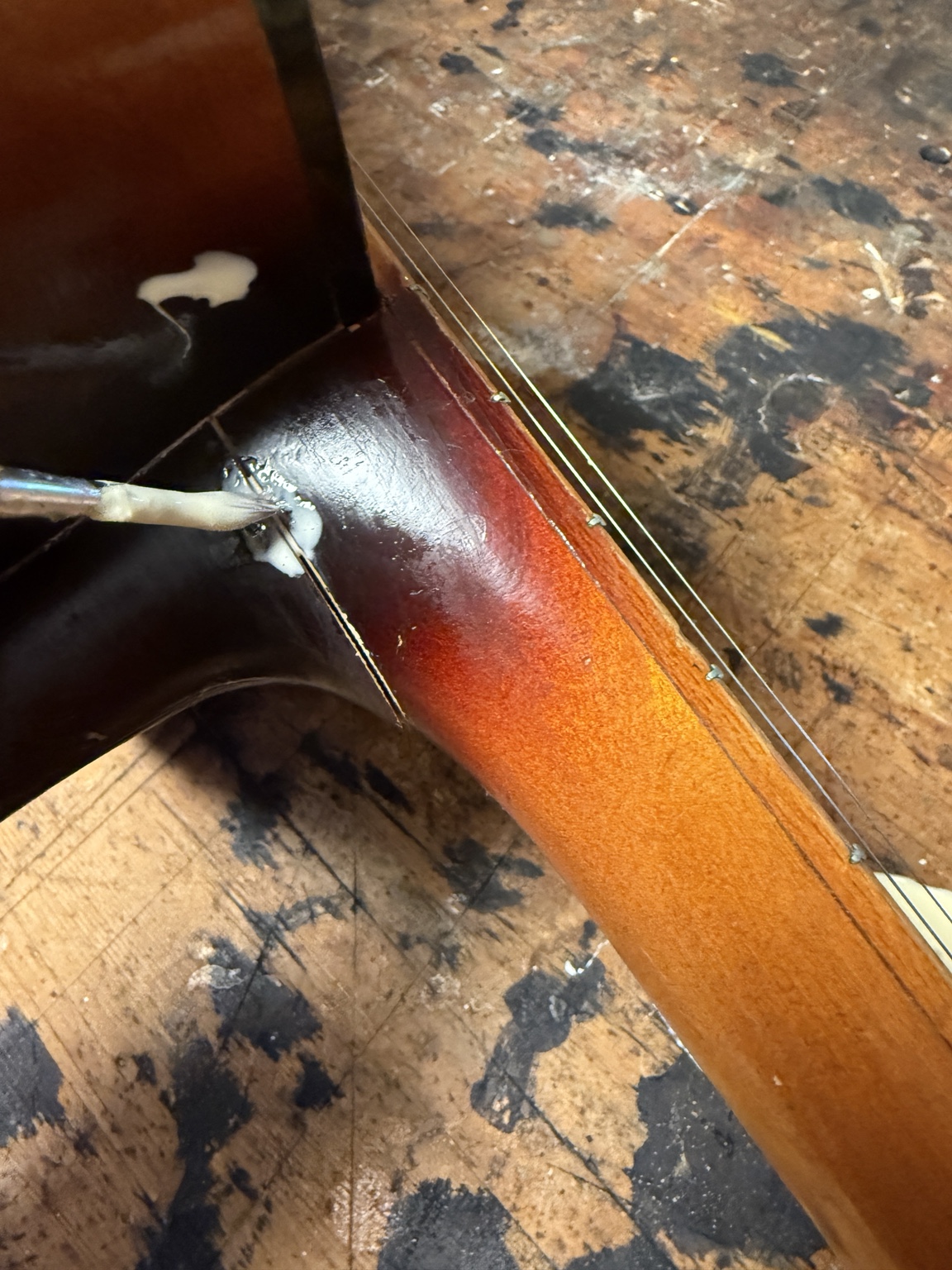
For this kind of wood joint, Titebond wood glue is an excellent choice when the conditions are suitable. I use a small, fine brush to work the glue as deeply as possible into the crack. Simply spreading glue across the surface is not enough: it needs to reach the wood surfaces that must bond together.
A suction cup and a little air
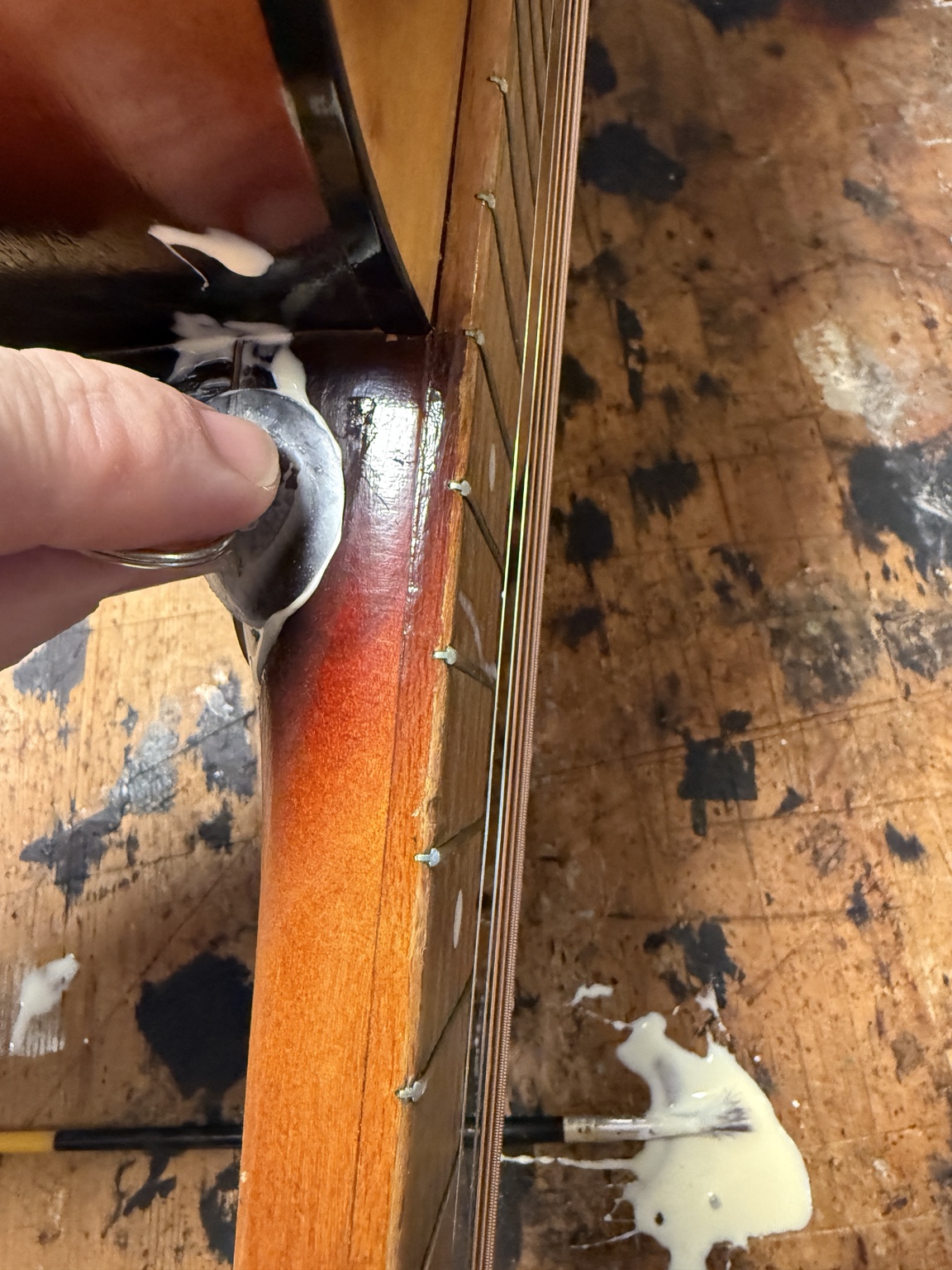
Next, I use a small suction cup to help move the glue further into the opening. I also gently blow air into the crack. When I press the joint together, you can see the glue bubbling back out. That is encouraging evidence that the glue has reached inside, although the strength of the finished repair also depends on the condition of the wood and joint.
Clamping and a 24-hour wait
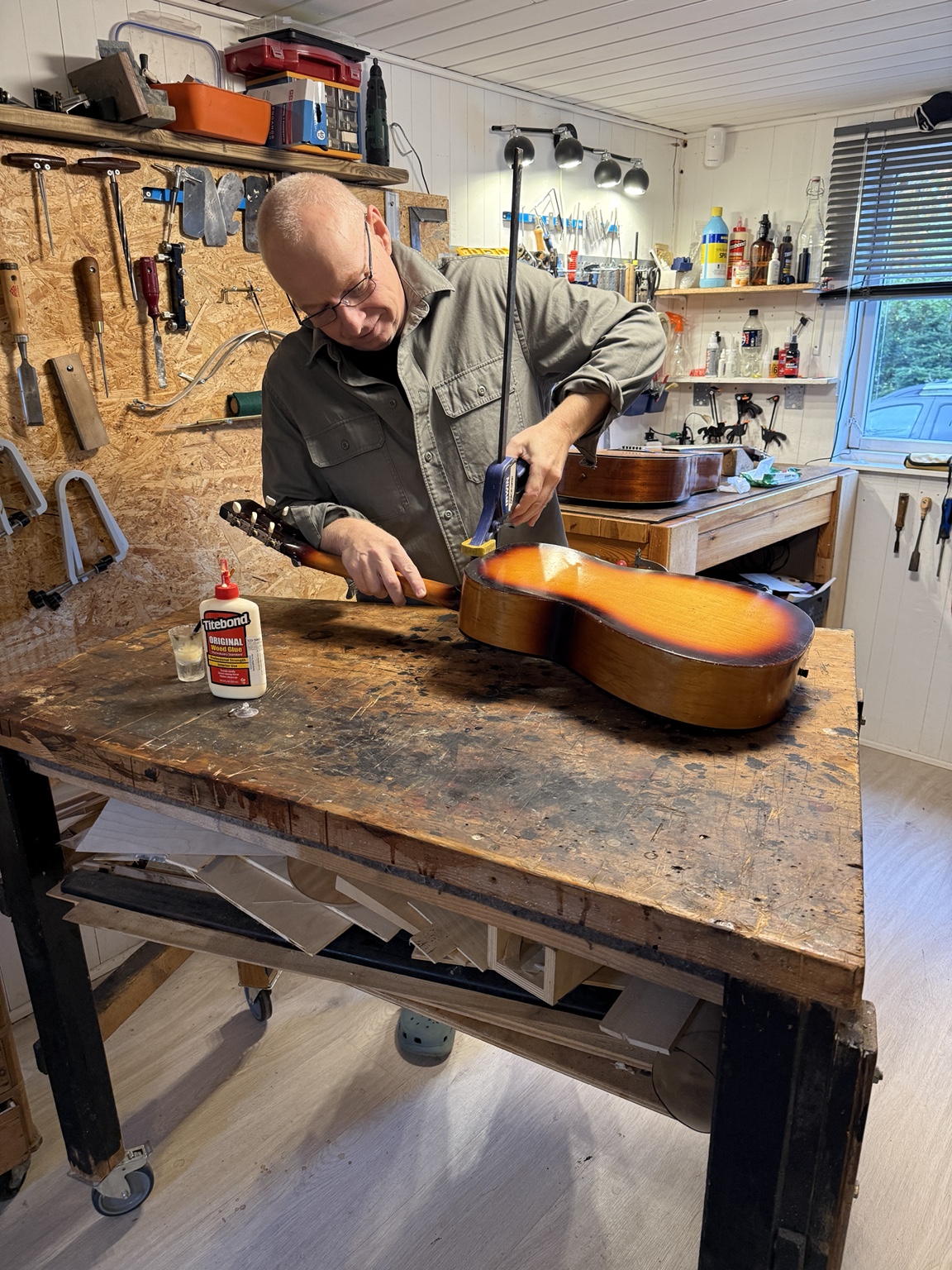
Once the glue has been distributed, I close the crack with a clamp, taking care to protect the instrument's finish. The joint stays clamped for approximately 24 hours while the glue sets. Afterwards, a little colour touch-up can help the repair blend in. Naturally, I check the joint before returning the guitar to its owner.
Is a budget guitar worth repairing?
Often, yes! A relatively simple glue repair like this does not necessarily cost much. If the guitar works well for its owner, repairing it can be a much better option than throwing it away. Every case is different, however. Other kinds of damage can require considerably more workshop time and therefore cost substantially more.
If your guitar has a crack or damage around the neck joint, get in touch with the instrument workshop. We can assess the problem and whether a repair makes practical and financial sense.