How Do You Lower Guitar Action? – String Height and Intonation Explained
Are your guitar strings too high? Learn how the nut, truss rod, bridge and frets affect string action and intonation, and why a proper setup involves them all.
How can you bring the strings closer to the fretboard without making your guitar buzz? Many players want lower string height, also called action. But lowering the bridge alone is not always the answer. The nut, neck relief, truss rod, frets and bridge all work together, and their settings can also affect how accurately the guitar plays in tune.
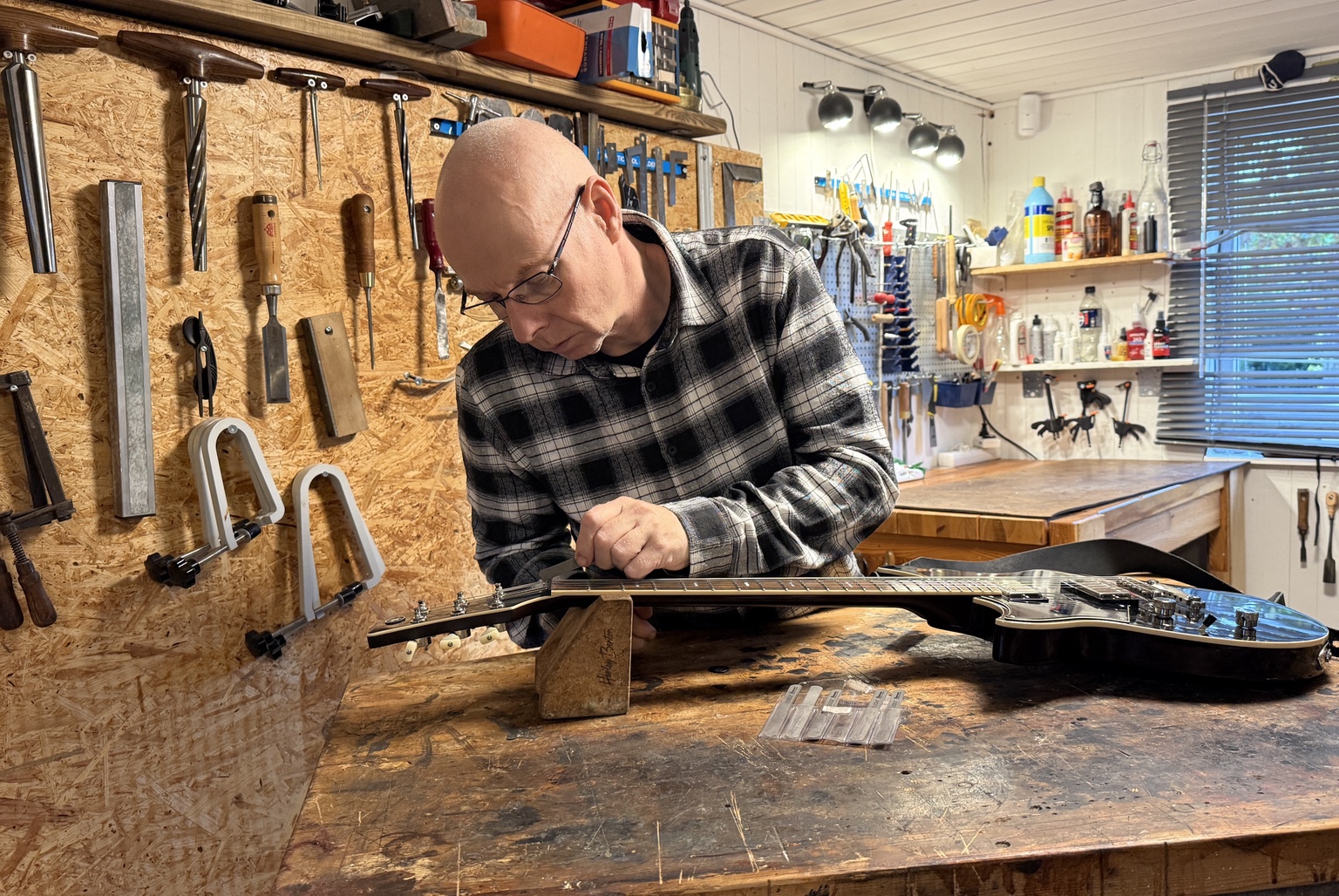
What is guitar action, and how is string height measured?
Action is the distance from the top of a fret to the underside of a string, often measured at the 12th fret. Lower action can make a guitar easier to play, but if the strings are too close to the frets, they may buzz. The right height depends on the instrument, string gauge and playing style.
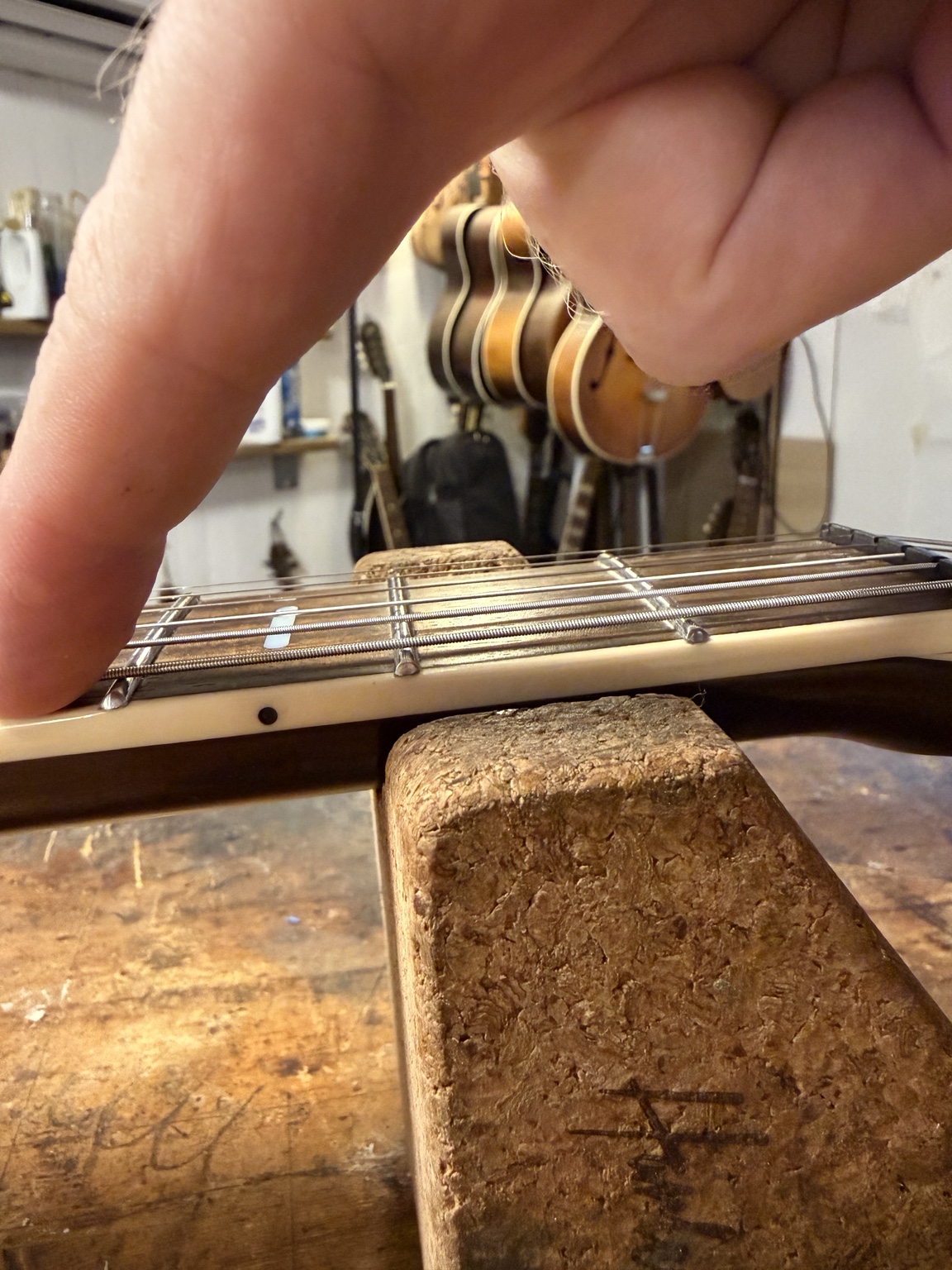
Nut height: Why are the strings too high near the first frets?
The nut sits where the fretboard meets the headstock. If its slots are too high, chords in the first positions require extra pressure and notes may sound sharp because the strings are stretched too far when fretted. Proper nut slot height improves comfort and intonation. If the slots are filed too deep, open strings may buzz and the nut may need repair or replacement.
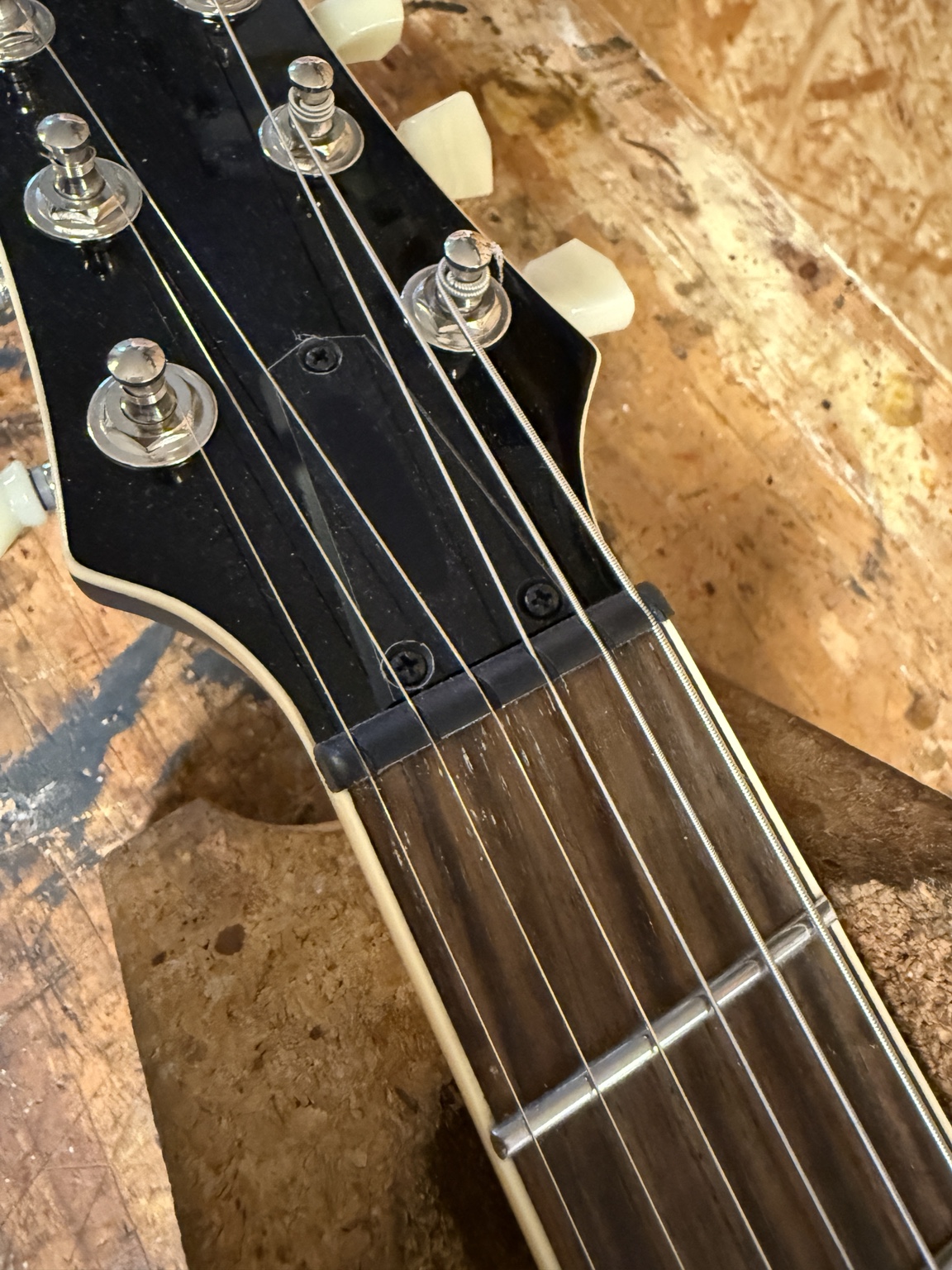
Truss rod: How neck relief affects guitar action
On many guitars, the truss rod adjusts the neck's curvature, or relief. A small amount of forward relief gives vibrating strings room to move. Excessive relief can make action unnecessarily high in the middle of the neck, while a neck that is too straight or back-bowed may cause fret buzz. The truss rod is not simply an action-height screw; its job is to adjust neck relief. Never force a truss rod that resists turning.
Bridge height: How do you lower the strings on an electric or acoustic guitar?
Once neck relief and nut height have been checked, bridge height can be assessed. Many electric guitars allow height adjustments at the bridge or individual saddles. On acoustic guitars, lowering action may involve carefully reducing the height of the saddle insert. Removing too much material can make the strings too low. On acoustic instruments, an appropriate string break angle over the saddle also matters.
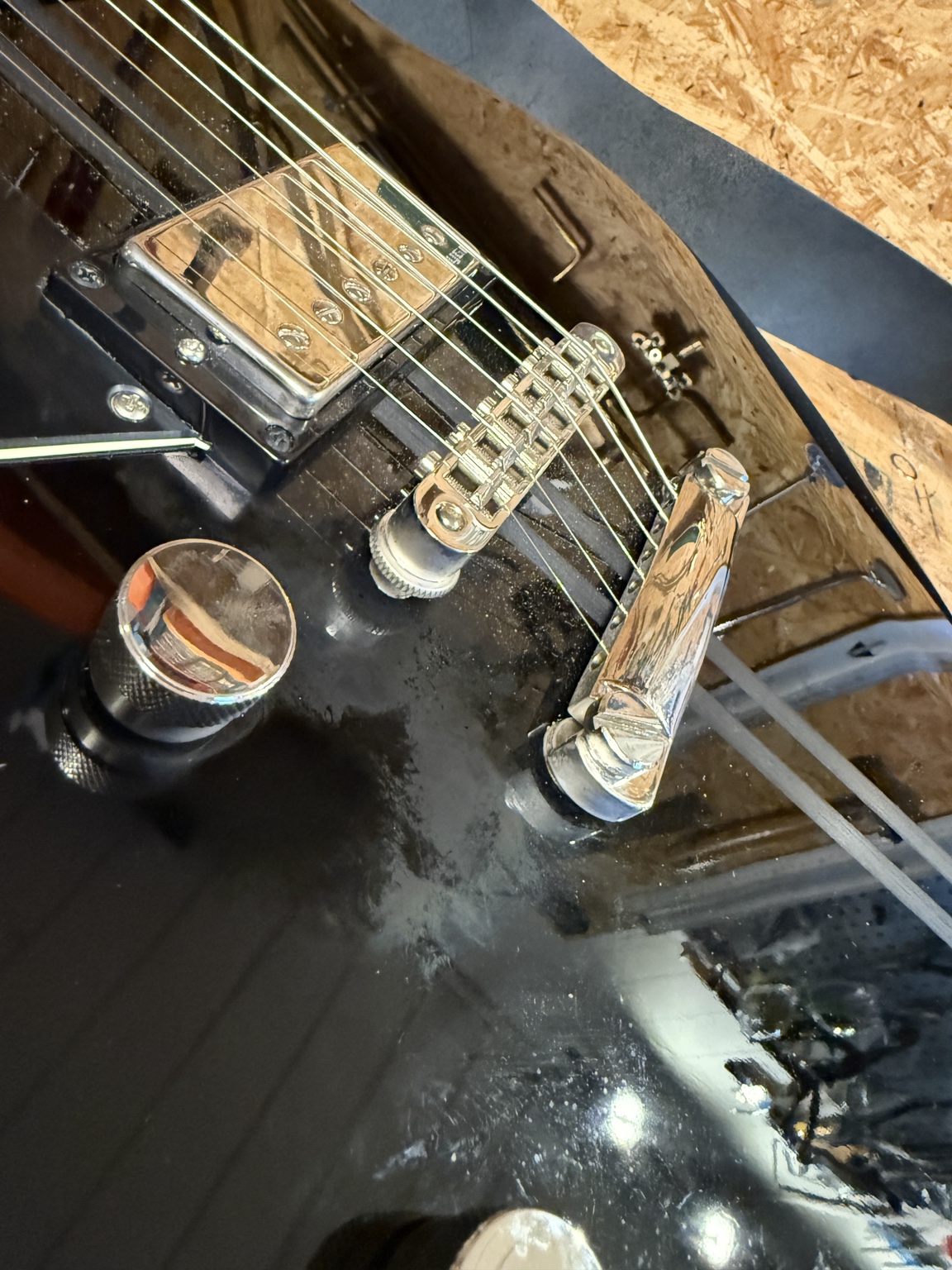
Why does a guitar buzz even when the action seems right?
Uneven or worn frets can cause buzzing even when the nut, neck and bridge are correctly set up. Sometimes fretwork is needed before a guitar can achieve comfortably low action.
How do you adjust guitar intonation?
Intonation describes how accurately a guitar plays in tune along the fretboard. Open strings can be perfectly tuned while fretted notes still sound sharp or flat. A common check compares the fretted note at the 12th fret with its corresponding octave. If the fretted note is sharp, the string's effective length generally needs to increase; if it is flat, the length generally needs to decrease. On many electric guitars, individual saddles can be moved backward or forward. On acoustic guitars, correction may require a compensated saddle. Check intonation after adjusting neck relief and action because changes to string height can affect the result.
What is the correct order for setting up a guitar?
Start by checking the instrument's condition, strings and frets. Then assess neck relief, nut slot height and bridge settings, and finish by checking intonation. A guitar that feels difficult to play does not necessarily need a lower bridge: the problem might be a high nut or excessive neck relief. The goal is not the lowest possible action, but the best balance of playability, accurate tuning and free string vibration.
Guitar setup and repairs at my workshop in Tornemark
At my instrument workshop in Tornemark, Denmark, I set up, repair and restore both acoustic and electric guitars. If your guitar has high action, fret buzz or intonation problems, feel free to contact me. The workshop is near Slagelse, Næstved, Skælskør, Sorø and Ringsted, and visits are by appointment.
Michael Staun – Instrument Workshop, Tornemark