Guitar Truss Rod Adjustment – Understanding Neck Relief
Learn what a guitar truss rod does, where its adjustment is located, and why neck relief matters. Illustrated with original photos from Michael Staun’s workshop in Denmark.
A comfortable guitar neck is not always perfectly straight. A small amount of forward curvature, known as neck relief, allows vibrating strings room to move. On many guitars, that curve can be adjusted using a metal reinforcement rod inside the neck: the truss rod.
What does a truss rod do?
The rod helps counteract string tension and lets a technician alter the neck’s curvature. It is one part of the guitar’s overall setup, not a universal solution for high string action. Bridge and nut height, fret condition and other factors matter too.
Where is the adjustment located?
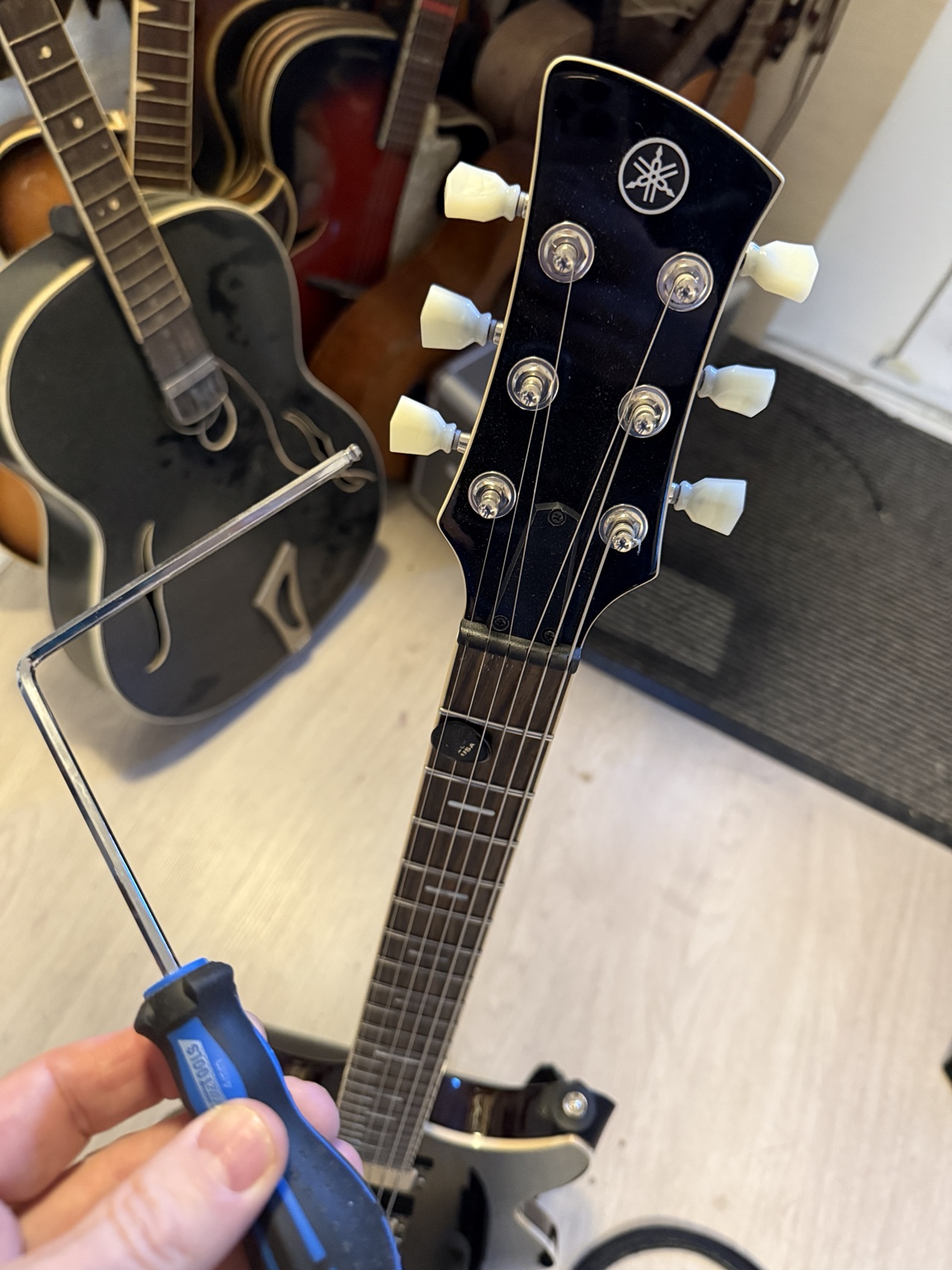
The position varies between instruments. On many electric guitars and some steel-string acoustics, the adjustment nut is near the headstock, just beyond the nut.
On many acoustic steel-string guitars, including various Martin models, it is accessed through the soundhole at the neck end of the body.
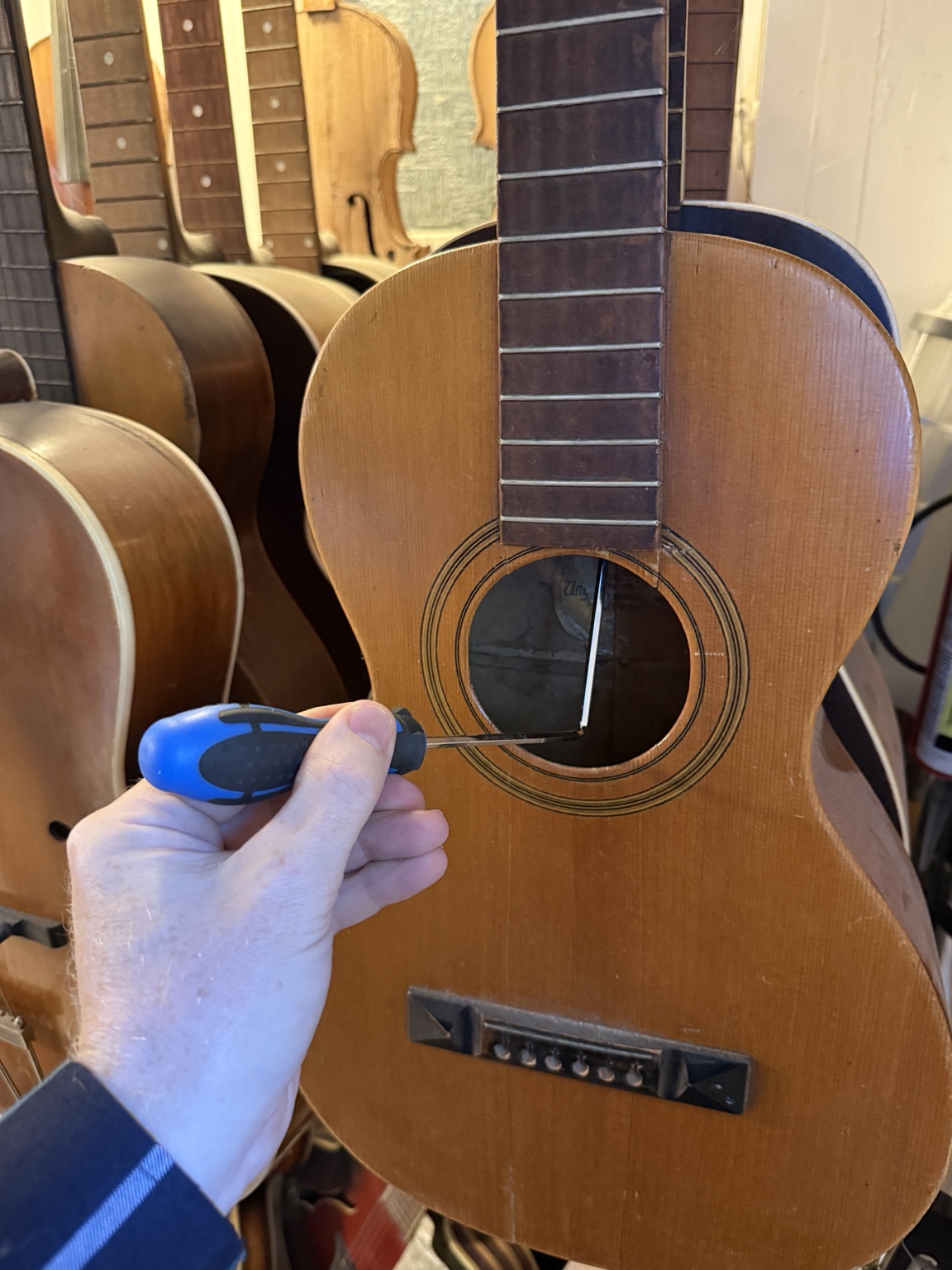
The two original workshop photos illustrate these different arrangements. Always use a tool that fits the specific adjustment nut correctly.
How can you check neck relief?
With the guitar at playing pitch, hold a string down at the first fret and again near the fret where the neck joins the body. The small clearance between the string and a fret around the middle of that span gives an indication of relief. The appropriate amount depends on the instrument and the player. Determine whether the neck curve is truly the problem before attempting adjustments.
When might an adjustment be needed?
Buzzing in certain parts of the fingerboard or an unusually stiff playing feel may involve neck relief. Changes in humidity, temperature and string gauge can affect how the neck responds. However, buzzing and high action can also have other causes, so diagnosis comes first.
Adjust with care
Never force a truss rod. Its construction and correct turning direction need to be understood before any adjustment is made. Even small changes can affect playability, while excessive force or an incorrect approach can damage the neck or rod. Stop if the nut feels stuck, the tool does not fit or you are unsure what to do.
Guitar setup in Tornemark, Denmark
At my instrument workshop I assess the whole guitar setup, including neck relief, action and playing comfort, on both acoustic and electric guitars. You are welcome to get in touch if your instrument needs attention.
You may also like my guide to changing guitar strings and the article about my instrument workshop.
Michael Staun
Instrument Workshop – Tornemark